Monday, August 08, 2011

Meet Marsha: Conflict Resolution and the i Style

Marsha had a difficult time hiding her feelings from the rest of the group during her recent confrontation with Pete and Jeffrey.

Marsha was excited to share her ideas with the rest of her team but became frustrated when she felt Pete and Jeffrey were too critical. Marsha felt like her creativity was being questioned by their negative comments. Her enthusiasm turned to frustration and she defended her ideas strongly. Jeffrey’s name calling felt personal and Marsha left the conference room in tears.

The i Style: At a Glance
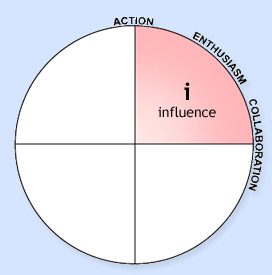
DiSC i Style

i Stands for influence

Positives:
  • Outgoing
  • Enthusiastic
  • Optimistic
  • Encourages Collaboration
Negatives:
  • Impulsiveness
  • Disorganization
  • Lack of follow-through
Quote
Happy are those who dream dreams and are ready to pay the price to make them come true. - Leon J. Suenes

How does Marsha handle conflict?

Marsha, like Jeffrey, handles conflict head on. Because Marsha and other “i styles” are naturally fast-paced, they are enthusiastic and passionate during discussions and may monopolize the conversation. The i personality is known for being open with their feelings but can become overly expressive and emotional during arguments. They can also become flustered and disorganized if they feel they are being bombarded.

How does this affect other styles?

The emotion that “i styles” bring to the table can make their colleagues feel very uncomfortable. Marsha and other high i’s are often seen as overly emotional or dramatic. Their colleagues may view them as high maintenance and try to avoid confrontations with them altogether.

What can Marsha do to improve?

Those with an i personality bring creativity, enthusiasm and positive energy to any team but need to be able to accept criticism in order to take their ideas to the next level. Marsha should first and foremost slow down during arguments and really focus in on what her colleagues are saying. High i’s can be much more effective if they remain objective during discussions and eliminate the emotional influence.

This and the rest of these blogs have been developed using the Everything DiSC® Workplace profiles, group reports and facilitator’s kit.

Join us for our next blog post in which we dive into the “S” style and how they handle conflict with others.

Tuesday, August 02, 2011

Meet Jeffrey: Conflict Resolution & the DiSC Style

If you read our last blog post, DiSC Profiles Minimize Conflict and Maximize Productivity, then you can recall the story of Steve and his sales team.
Jeffrey and Marsha were yelling at each other during a discussion that originally surrounded one of Marsha’s ideas. Jeffrey grew frustrated when Marsha felt attacked by Jeffrey and became emotional. From there, Jeffrey lost focus of their original discussion, and began targeting Marsha’s personality, at one point calling her, “over emotional.”
The D Style: At a Glance
D stands for Dominance

Positives:
  • Fast-paced
  • Strong-willed
  • Results-oriented
  • Confident

Negatives:
  • Impatient
  • Under-developed people skills
  • Insensitive

Quote
Effective leadership is not about making speeches or being liked; leadership is defined by results not attributes. – Peter Drucker
How does Jeffrey handle conflict?
Jeffrey handles conflict head on. Since those of a “D style” are fast-paced, you may find they interrupt others. They value honesty, but may lack tact in their delivery. If they feel as though they are not being heard, they can become argumentative orbelligerent. If they are having a discussion with a slower-paced individual, the D style can become impatient and frustrated.
How does this affect other styles?
Other styles may view the D style as demanding and difficult to work with. Other team members may stop speaking up in order to avoid conflict. Some members may become stressed outoverwhelmed and decide to leave the department or company.
What can Jeffrey do to improve?
While Jeffrey may have insightful things to say, he must realize that people may not listen, simply because of his tone. In order to effectively resolve conflicts with others, high D’s should practice patience and learn to effectively listen to what others are saying. They should express empathy and consider other people’s feelings before speaking. Since Jeffrey certainly has the determination to succeed, developing hispeople skills will make him more approachable and, thus more valuable to the team.
This and the rest of these blogs have been developed using the Everything DiSC® Workplace profiles, group reports and facilitator’ kit.
Join us for our next blog post in which we dive into the “i” style and how they handle conflict with others.

Friday, July 22, 2011

DiSC Profiles Minimize Conflict and Maximize Productivity

SCENE
It’s a busy Wednesday afternoon at ABC Technology, Inc. a mid-sized software and IT company based in Philadelphia, PA. STEVE, a quiet, yet successful Sales Manager, is walking down a long hallway to the coffee station when he overhears a shouting match going on between two of his employees. He finds them and the rest of his sales team in a nearby conference room.

STEVE
(Entering the conference room)
Woah! What’s going on here? What are you guys fighting about? I could hear you from down the hall.

JEFFREY
(Walking over to STEVE)
We were originally discussing an idea that Marsha had come up with, but she became irrational when we pointed out the flaws in her plan.

MARSHA
(Quickly standing up and point at JEFFREY.)
I did not get irrational! That’s just like you, Jeff. You cut me off when I’m speaking, and don’t expect me to continue with my thought. I hadn’t even gotten halfway...