Showing posts with label conflict resolution. Show all posts

Thursday, October 24, 2013

Throwback Thursday: DiSC Profiles Minimize Conflicts and Maximize Productivity

Throwback Thursday
A Manager's Worst Nightmare
Using DiSC Profiles to Minimize Conflict

A team that's disengaged and constantly bickering is a manager's worst nightmare. How do you get everyone on the same page? How do you get everyone using the same language and appreciating each other's differences? It can be really tough if you don't have the right resources. 

A few years back, I posted a blog series dedicated to a disruptive team and how to use Everything DiSC Profiles to minimize the conflict, with specific blog posts designed for each of the DiSC styles. You can even use the script to act out the event during your next DiSC training program! It's a great icebreaker. 

Halloween is right around the corner, and there is absolutely nothing scarier than working with people you don't like (or even worse, managing people that don't like each other). Enjoy this blog post, and contact us if you need help getting your team members on the same page! 

Jonelle

SCENE
It's a busy Wednesday afternoon at ABC Technology, Inc. a mid-sized software and IT company based in Philadelphia, PA. STEVE, a quiet, yet successful Sales Manager, is walking down a long hallway to the coffee station when he overhears a shouting match going on between two of his employees. He finds them and the rest of his sales team in a nearby conference room.

STEVE
(Entering the conference room)

Woah! What’s going on here? What are you guys fighting about? I could hear you from down the hall.

JEFFREY
(Walking over to STEVE)

We were originally discussing an idea that Marsha had come up with, but she became irrational when we pointed out the flaws in her plan.

MARSHA
(Quickly standing up and pointing at JEFFREY)

I did not get irrational! That’s just like you, Jeff. You cut me off when I’m speaking and don’t expect me to continue with my thought. I hadn't even gotten halfway through saying my idea before Pete started tearing it to shreds!

STEVE
(Turning to PETE, looking surprised)

Pete, is this true?

PETE
(Quiet, but stern)
Not entirely. You see, I was merely informing Marsha that her idea needs much more fine tuning before being presented to the rest of the group. For example, when she states…

MARSHA
(Becoming more frustrated)

See, Steve?! He’s doing it again. How am I supposed to be creative, when I've got these guys pointing out every imperfection?

STEVE
(Turning to MARSHA)

Now Marsha…

JEFFREY
(Yelling)

Relax, Marsha! You’re being overly emotional.

STEVE
(Turning to JEFFREY)

Now Jeff… wait a second…

MARSHA
(Eyes watering. Fighting back tears.)

I am NOT being overly emotional, Jeff!
(MARSHA begins to cry and darts out of the conference room.)

STEVE
(Looking confused, STEVE turns to APRIL who is sitting quietly at the conference room table.)

April, have you really been in here this whole time?

APRIL
Um… yeah. Should I… still be taking minutes?


Take a minute to think about what you just read. Do you side with anyone in particular? Where would you fit into this situation? Would you be battling it out like Jeff and Marsha, or would you watch the war unfold like Pete and April?

The point of the story is that, although dramatic, these situations can happen when varying personalities work closely together on a daily basis. Even the most effective groups will have the occasional conflicts and misunderstandings.

Whether you’re approaching an important deadline, undergoing organizational changes or bringing in a new employee, additional stress can mean more tension and more conflict. It’s working through those difficult times that really prove your group’s strength and your abilities as a manager.

Why does it matter?

Unnecessary disagreements can cause:

  • Unhappy employees
  • Unspoken resentment
  • High turnover
  • Lower productivity
  • Smaller bottom line!
What can you do to reduce conflict?

Understanding your team members is the first step to reducing and resolving conflict within your group. The better you know your group, the more you’ll be able to anticipate and avoid blow-ups like this or hidden resentment from your team.

Once you understand your group, you will be able to:

  • Create an environment that encourages your staff to respect each other.
  • Get a good grasp of your team members’ priorities, interests and fears.
  • Improve your ability to recognize conflict.
  • Learn how to effectively resolve conflict.
  • Offer tips and techniques to employees on working together.
If you’re not utilizing DiSC profiles within your organization, you are missing out on vital information that will help you better understand your team’s strengths and weaknesses. DiSC is a great way to find out more about your group in a fun, comfortable atmosphere. Your team will learn more about themselves and how they relate to each other, and you’ll learn how to effectively manage a team full of varying behavioral styles.

This blog series will introduce you to each of the D, i, S and C styles and how they influenced the characters’ behaviors in our story:


Download a copy of the script, and use it as an icebreaker with your group! Start a discussion about conflict, personality differences and teamwork.

Remember: Working well with others is not about compromising who you are but rather accepting others and adapting yourself to those around you. Start using DiSC profiles to create a common language among your team and start working more effectively together. 

Monday, August 15, 2011

Meet April: Conflict Resolution and the S Style

April quietly watched as the confrontation with Marsha and Jeff grew louder and more intense.

Each time Marsha and Jeffrey raised their voice, April became even more uncomfortable, slipping deeper into her conference room chair.  April was so quiet, in fact, that Steve did not realize she was in the room until after the argument. And who can forget April’s classic line, “Should I… still be taking minutes?”

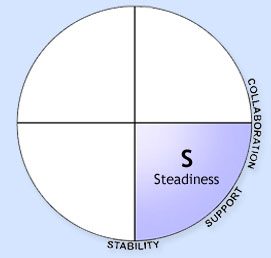
The S Style: At a Glance
DiSC S Style

S Stands for Steadiness

Positives:
  • Even-tempered
  • Accommodating
  • Patient
  • Tactful
Negatives:
  • Overly accommodating
  • Avoids change
  • Indecisiveness
Quote
Part of courage is simple consistency. - Peggy Noonan

How does April handle conflict?

Some may say that April and other S styles do not handle conflict at all. Since harmony and stability are important to April, it’s likely that she will avoid confrontations at all costs. If the S style feels forced into a confrontation, they will give in easily and avoid revealing their true feelings. Their goal is to avoid hurting others and remove themselves from the situation as quickly and amicably as possible.

How does this affect others?

Others may realize when April is not being honest about her feelings and feel hurt and untrusting of April. Some colleagues may stop asking for her opinion altogether. The S style may be seen as weak or cowardly if they continue to avoid expressing their opinions when with the group. Their team members may think they are afraid or uninterested in working with the group.

What can April do to improve?

April and other S styles are great listeners, consistent workers and can anchor a group during rough seas. The S style needs to display more self-confidence and feel comfortable revealing their true feelings. April can bring a lot to the table, but needs to become more involved in discussions if she wants to be noticed for her talent. Make decisions and be open about your ideas, and you can go a long way.

This and the rest of these blogs have been developed using the Everything DiSC® Workplace profiles, group reports and facilitator’s kit.

Join us for our next blog post in which we dive into the C style and how they handle conflict with others.

Monday, August 08, 2011

Meet Marsha: Conflict Resolution and the i Style

Marsha had a difficult time hiding her feelings from the rest of the group during her recent confrontation with Pete and Jeffrey.

Marsha was excited to share her ideas with the rest of her team but became frustrated when she felt Pete and Jeffrey were too critical. Marsha felt like her creativity was being questioned by their negative comments. Her enthusiasm turned to frustration and she defended her ideas strongly. Jeffrey’s name calling felt personal and Marsha left the conference room in tears.

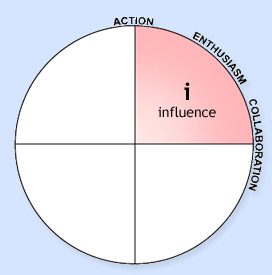
The i Style: At a Glance
DiSC i Style

i Stands for influence

Positives:
  • Outgoing
  • Enthusiastic
  • Optimistic
  • Encourages Collaboration
Negatives:
  • Impulsiveness
  • Disorganization
  • Lack of follow-through
Quote
Happy are those who dream dreams and are ready to pay the price to make them come true. - Leon J. Suenes

How does Marsha handle conflict?

Marsha, like Jeffrey, handles conflict head on. Because Marsha and other “i styles” are naturally fast-paced, they are enthusiastic and passionate during discussions and may monopolize the conversation. The i personality is known for being open with their feelings but can become overly expressive and emotional during arguments. They can also become flustered and disorganized if they feel they are being bombarded.

How does this affect other styles?

The emotion that “i styles” bring to the table can make their colleagues feel very uncomfortable. Marsha and other high i’s are often seen as overly emotional or dramatic. Their colleagues may view them as high maintenance and try to avoid confrontations with them altogether.

What can Marsha do to improve?

Those with an i personality bring creativity, enthusiasm and positive energy to any team but need to be able to accept criticism in order to take their ideas to the next level. Marsha should first and foremost slow down during arguments and really focus in on what her colleagues are saying. High i’s can be much more effective if they remain objective during discussions and eliminate the emotional influence.

This and the rest of these blogs have been developed using the Everything DiSC® Workplace profiles, group reports and facilitator’s kit.

Join us for our next blog post in which we dive into the “S” style and how they handle conflict with others.

Tuesday, August 02, 2011

Meet Jeffrey: Conflict Resolution & the DiSC Style

If you read our last blog post, DiSC Profiles Minimize Conflict and Maximize Productivity, then you can recall the story of Steve and his sales team.
Jeffrey and Marsha were yelling at each other during a discussion that originally surrounded one of Marsha’s ideas. Jeffrey grew frustrated when Marsha felt attacked by Jeffrey and became emotional. From there, Jeffrey lost focus of their original discussion, and began targeting Marsha’s personality, at one point calling her, “over emotional.”
The D Style: At a Glance
D stands for Dominance

Positives:
  • Fast-paced
  • Strong-willed
  • Results-oriented
  • Confident

Negatives:
  • Impatient
  • Under-developed people skills
  • Insensitive

Quote
Effective leadership is not about making speeches or being liked; leadership is defined by results not attributes. – Peter Drucker
How does Jeffrey handle conflict?
Jeffrey handles conflict head on. Since those of a “D style” are fast-paced, you may find they interrupt others. They value honesty, but may lack tact in their delivery. If they feel as though they are not being heard, they can become argumentative orbelligerent. If they are having a discussion with a slower-paced individual, the D style can become impatient and frustrated.
How does this affect other styles?
Other styles may view the D style as demanding and difficult to work with. Other team members may stop speaking up in order to avoid conflict. Some members may become stressed outoverwhelmed and decide to leave the department or company.
What can Jeffrey do to improve?
While Jeffrey may have insightful things to say, he must realize that people may not listen, simply because of his tone. In order to effectively resolve conflicts with others, high D’s should practice patience and learn to effectively listen to what others are saying. They should express empathy and consider other people’s feelings before speaking. Since Jeffrey certainly has the determination to succeed, developing hispeople skills will make him more approachable and, thus more valuable to the team.
This and the rest of these blogs have been developed using the Everything DiSC® Workplace profiles, group reports and facilitator’ kit.
Join us for our next blog post in which we dive into the “i” style and how they handle conflict with others.

Friday, July 22, 2011

DiSC Profiles Minimize Conflict and Maximize Productivity

SCENE
It’s a busy Wednesday afternoon at ABC Technology, Inc. a mid-sized software and IT company based in Philadelphia, PA. STEVE, a quiet, yet successful Sales Manager, is walking down a long hallway to the coffee station when he overhears a shouting match going on between two of his employees. He finds them and the rest of his sales team in a nearby conference room.

STEVE
(Entering the conference room)
Woah! What’s going on here? What are you guys fighting about? I could hear you from down the hall.

JEFFREY
(Walking over to STEVE)
We were originally discussing an idea that Marsha had come up with, but she became irrational when we pointed out the flaws in her plan.

MARSHA
(Quickly standing up and point at JEFFREY.)
I did not get irrational! That’s just like you, Jeff. You cut me off when I’m speaking, and don’t expect me to continue with my thought. I hadn’t even gotten halfway...